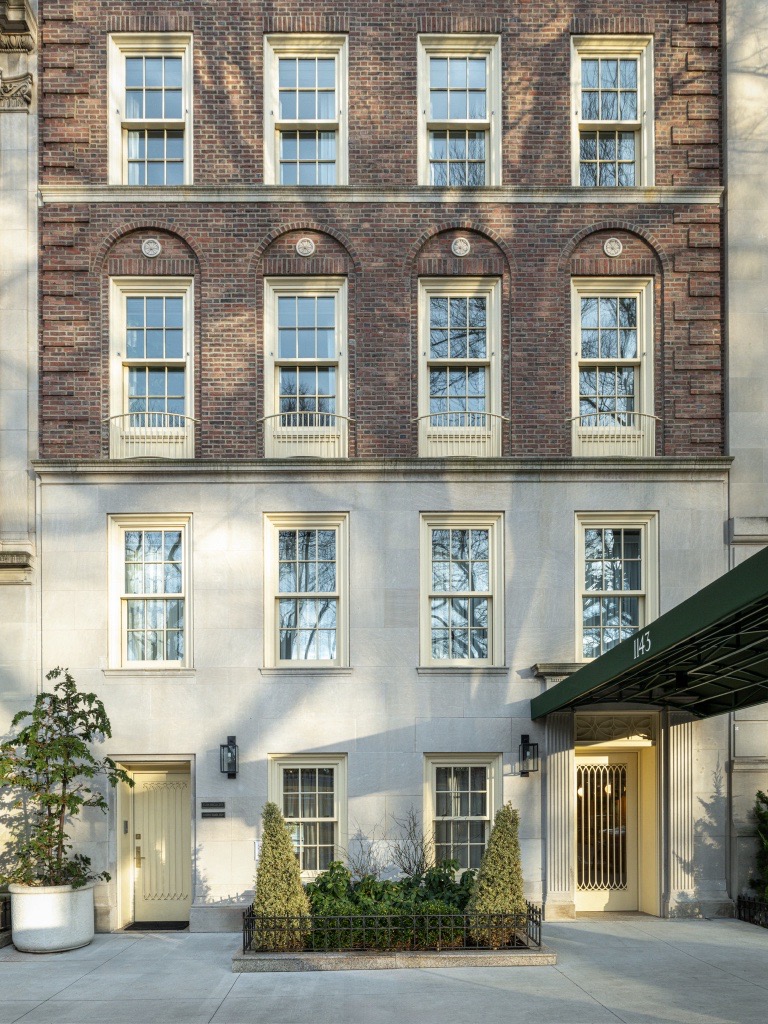
In 2024 Dr. Elisa Mello and Dr. Ramin Tabib came to us with a question that sounds simple and rarely is: can I afford to build the practice I actually want? They had an exceptional reputation, a waiting list, and 700 square feet of Manhattan clinical space. Financing closed that September. In December 2025 The Smile Code opened at 1143 Fifth Avenue, 2,500 square feet, state of the art, and funded at one hundred percent.
The practitioners
The clinical work is why this project was financeable at all. A lender can tell the difference between a practice with a following and a practice with a marketing budget.
Dr. Elisa Mello and Dr. Ramin Tabib are married and run the practice together. Between them they bring more than sixty years of dentistry, and in our experience of client businesses that is an unusual thing to be able to say: two principals with that depth, working the same chairs, holding each other to the same standard.
We have talked with their patients and read through the reviews, and the same three things come up every time: thorough, education-driven, unusually creative. Consistency like that is the tell — a reputation built on marketing does not repeat itself so precisely.
What they do not do is look at a mouth through the lens of what can be put into it. They look at every angle: the bite, the smile, proportion and size, how you brush, how you sleep, whether you grind. Every small detail gets accounted for, and out of that they design something that does not look like work has been done. It looks like it has been you all along. That is a design discipline as much as a clinical one, and it is rarer than it sounds.
We spend a good deal of our own time on where automation and AI genuinely improve a finance function, and where they don’t. But there is no software coming for this. Judgment of that kind — proportion, aesthetics, the read on a face — is not a workflow you can automate, and six decades of accumulated pattern recognition is not a dataset you can license.
What we fall in love with is rigorous execution. It is what we chase in our own work and the reason we are any good at it. But watching these two practice is a reminder of the difference between doing something well and doing it at the very top of a craft. They are at the summit. We are still climbing.
The Smile Code is fee-for-service practice by design rather than by circumstance. That constrains volume and raises the bar as a cosmetic practice, and it is the reason the numbers in the model held up under scrutiny: patients who choose to pay directly do not come back out of inertia.
You can see the practice and the team at thesmilecode.com.
The constraint
The clinical work was never the question. The practice had the reputation, the referral flow, and a waiting list. What it had was a footprint that capped everything, 700 square feet permits a certain number of chairs, a certain number of patients per day, and no room for the imaging and diagnostic equipment a modern fee-for-service practice is built around.
Growing meant taking on a space more than three times the size, in one of the most expensive submarkets in the country, and building it out to a specification that would justify the positioning. The construction budget, the first month of rent, and the security deposit all landed before a single new patient walked in.
That is the moment most practices stall. Not because the economics do not work, but because nobody has built the case in a form a lender can underwrite.
What we built
Our work here was the financial architecture behind the decision and the capital raise that followed.
A project budget a lender could test. Construction costs by trade and phase, equipment, professional fees, permits, and contingency, built line by line rather than as an allowance, so every dollar requested had a purpose attached to it.
A model that survived stress-testing. Chair utilization, procedure mix, collections timing, and the ramp curve from opening through stabilization. Then the downside cases: slower ramp, higher build cost, delayed occupancy. A lender does not fund the base case; they fund the case that still services debt when the base case misses.
A capital structure matched to the construction timeline. This is the part that made the project viable:
- One hundred percent financing: the full construction budget, the first month of rent, and the security deposit, all funded. No equity injection required from the practice.
- 5.5% interest: secured in a market where practice financing was pricing materially higher.
- Twelve months allocated to construction, with draws released against verified progress rather than in a lump sum.
- Interest-only for the first year post-construction: so the practice was not amortizing principal while the patient base was still ramping.
That last term is the one that matters most operationally. A practice opening its doors carries every fixed cost of the new footprint and only a fraction of the eventual revenue. Deferring principal through the ramp is the difference between a comfortable first year and a tight one.
This is not a one-off structure. Medical and dental practices occupy a lending category of their own, and one hundred percent financing is available from major institutions including Citi, Wells Fargo, Chase, and TD, not only specialty lenders. Practitioner default rates are low, which is why the terms look the way they do.
What decides the outcome is not whether the money exists. It is whether the project is presented in a form a credit committee can underwrite: a budget built by trade, a model that holds in the downside case, and a capital structure matched to the construction timeline.
Email us at info@kcpconsult.com if you are weighing a build-out, a relocation, or an acquisition. A conversation before you sign a lease is worth considerably more than one afterwards.
A depreciation position built before the first invoice was paid. A ground-up build of this kind creates two very different classes of asset, and how they are captured determines the tax outcome for years afterwards.
- Leasehold improvements: the build-out itself. Where the work qualifies as improvement property, the recovery period is materially shorter than the default for real property, which changes the whole profile of the deduction. The distinction turns on the nature of the work, so it has to be decided at the point of capitalization, not at the tax return.
- Equipment and technology: chairs, imaging, sterilization, IT. These are the assets that qualify for accelerated treatment under Section 179 expensing and Section 168(k) bonus depreciation, and in a year of heavy capital outlay the difference between claiming that and missing it is not marginal.
The practical effect is a stack of deductions landing in exactly the years the practice is at its most cash-constrained. Accelerated depreciation does not reduce operating costs (it is a non-cash charge) but it reduces taxable income, and therefore cash taxes, at the moment cash is scarcest. In a ramp year that is a real benefit, and it compounds: the deductions carry forward against profits as the practice stabilizes.
The reason this is a finance job rather than a tax-return job is timing. Every capitalization decision, asset class, and in-service date has to be recorded correctly as the build progresses. Reconstructing that afterwards from a contractor’s invoices is expensive, imprecise, and usually leaves deductions on the table. We maintained the fixed asset schedule alongside the construction draws, so the tax position was documented as it was created, and the accountants had a clean schedule rather than a shoebox.
The specific treatment depends on the nature of the work, the entity, and the rules in force for the year in question. Section 179 limits and bonus depreciation percentages change, so the position should always be confirmed with your tax advisor before it is relied on.
The timeline
September 2024, closing. Lease negotiated and executed on the Fifth Avenue space. Loan documents closed. Construction budget finalized and the draw schedule agreed with the lender.
Late 2024 through 2025, construction. Twelve months of build, with draws released against verified progress. Our role through this phase was budget-to-actual tracking by trade, managing the draw requests, and flagging variances early enough to be absorbed rather than escalated.
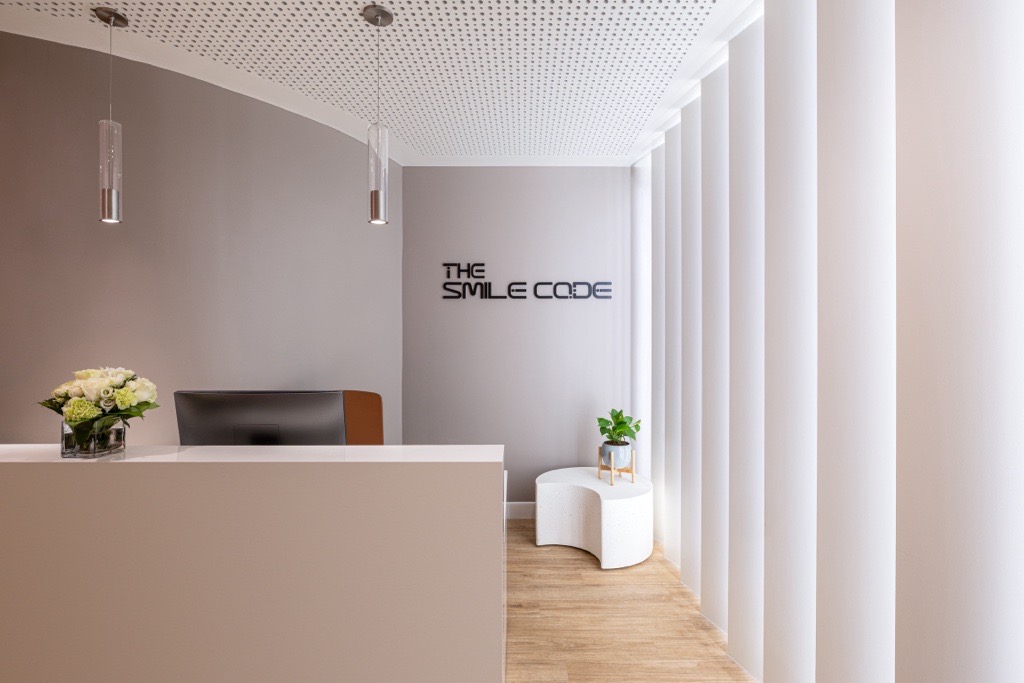
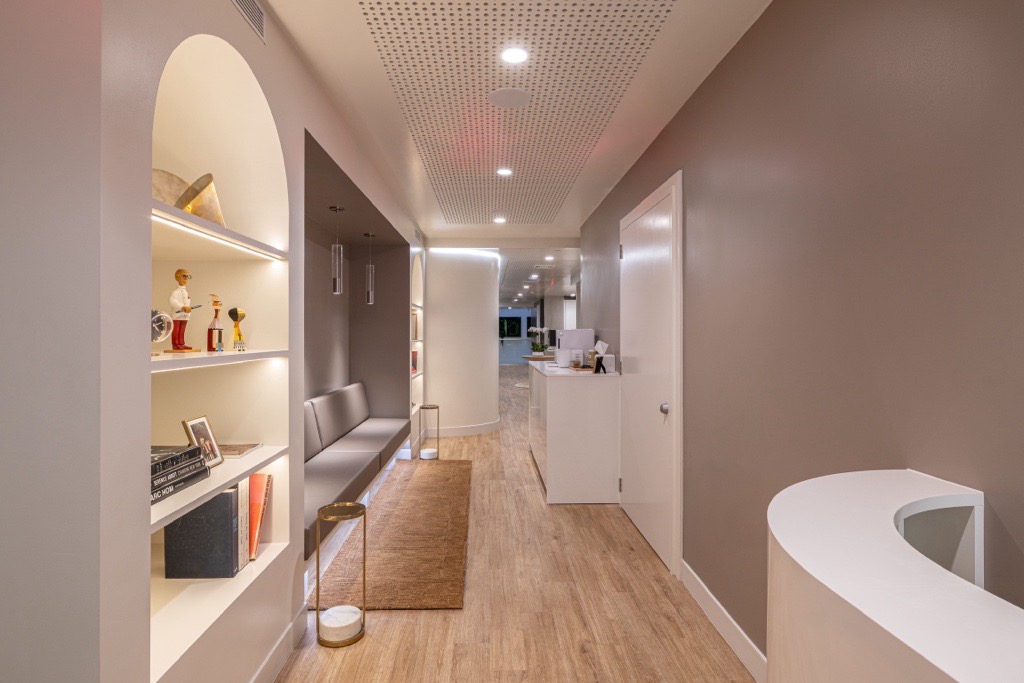
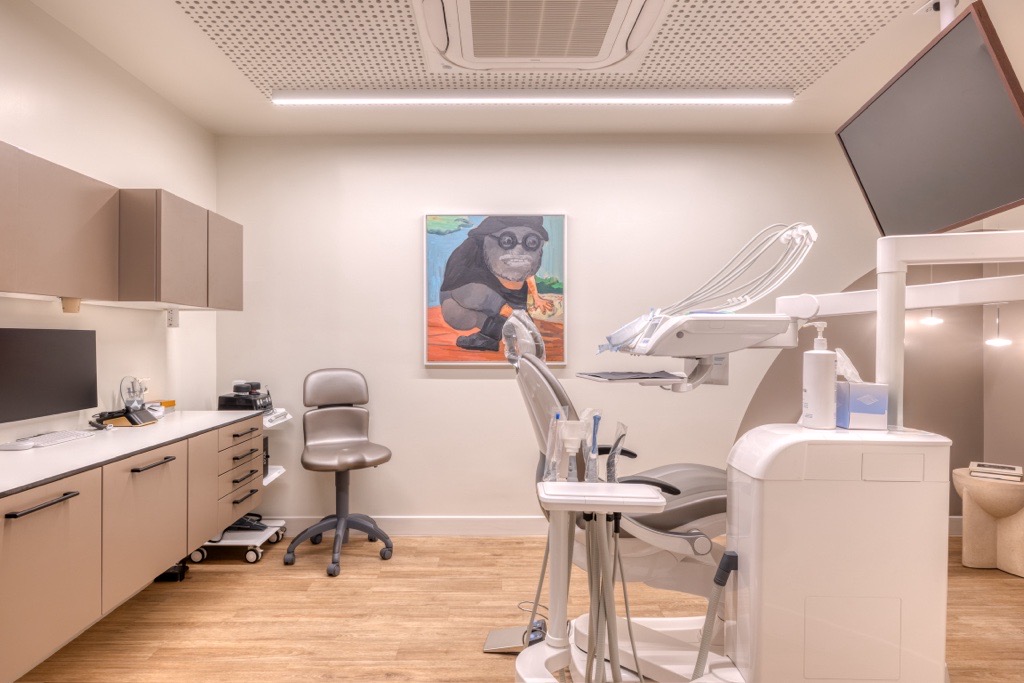
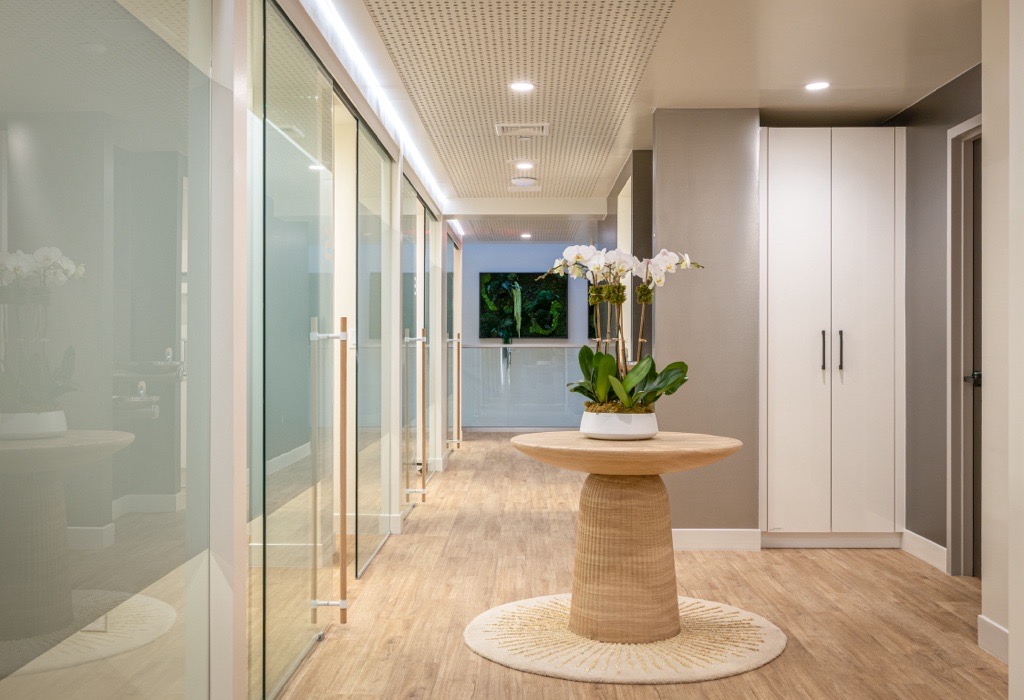
December 2025, opening. The practice opened as a fee-for-service flagship: state-of-the-art imaging, private treatment suites, and a patient experience built deliberately rather than inherited from a previous tenant.
What they are building next
The practice is now developing something we think is well-conceived: a direct subscription plan, designed as an alternative to dental coverage bought through a PEO.
The logic will be familiar to any owner who has priced employee dental benefits. You pay a monthly premium per employee, the coverage carries an annual maximum that preventive care alone can approach, and staff still arrive at the front desk paying out of pocket. The premium buys administration more than it buys dentistry.
The subscription inverts that. A flat monthly fee, direct to the practice, covering two cleanings a year, x-rays, diagnostic examination for cavities and other findings, and (the part most plans omit entirely) actual education about your own teeth. No claims, no annual maximum, no coverage determination. You know what you pay and you know what you get.
If you cover a small team, run the arithmetic against your current dental line. For most teams under twenty-five people it compares favorably, and the care is better.
The Smile Code is extending 20% off the monthly subscription fee to anyone who comes through us. Mention the code when you enquire.
Applies to the monthly subscription. Includes two cleanings per year, x-rays, diagnostic examination, and education on your dental health. Drs. Elisa Mello & Ramin Tabib · 1143 Fifth Avenue, New York, NY 10128 · thesmilecode.com
Why we are writing this one up
Partly because it is a clean illustration of what the finance function is actually for. Nobody at The Smile Code needed a consultant to tell them they were good at dentistry. What they needed was the numbers assembled well enough that a lender would fund the whole project at a rate that made it work, and then the discipline through twelve months of construction to keep the budget honest.
Mostly, though, because the practice is excellent, and you can feel it the moment you walk in. If you are in Manhattan and looking for a dentist, Drs. Elisa Mello and Ramin Tabib are the ones we send people to. You can find them at thesmilecode.com.